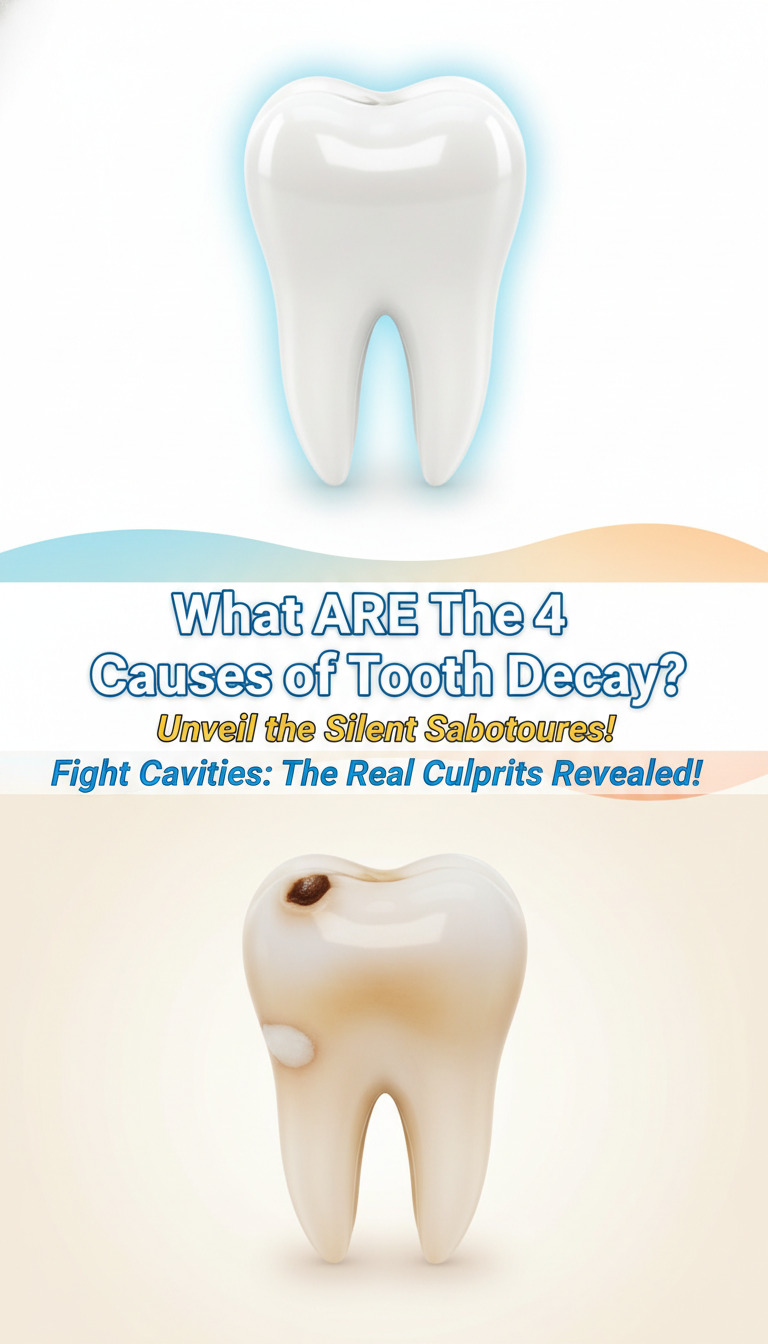
The 4 Silent Saboteurs: Unveiling the True Causes of Tooth Decay & How to Fight Back!
You brush. You floss (mostly). You try to avoid the candy aisle. Yet, you find yourself sitting in the dentist’s chair, hearing that dreaded scratch of the explorer tool against your enamel, followed by the words you fear most: “We found another cavity.”
It’s frustrating. It feels unfair. And it is a silent epidemic affecting billions worldwide.
Most people think cavities are just bad luck or the result of eating one too many chocolate bars. But the reality is far more complex. Tooth decay isn’t an event; it’s a process. It is a biological warfare happening inside your mouth right now.
To win this war, you need to know your enemy. It’s not just about “sugar bugs.” It’s about a specific alignment of four distinct factors that, when combined, create the perfect storm for dental caries explained simply: the rotting of your tooth structure.
If you want to stop dreading your dental checkups, you need to understand the root of the problem. Let’s strip away the myths and look at the science.
Understanding the Battlefield: What is Tooth Decay?
Before we unmask the culprits, let’s define the crime. Tooth decay, scientifically known as dental caries, is the permanent destruction of the hard, outer surface of your teeth (enamel).
It starts silently. You won’t feel pain when the acid first begins to strip minerals from your enamel. By the time you feel a twinge of sensitivity to hot coffee or cold ice cream, the damage has already penetrated deeper, likely reaching the softer dentin layer.
According to the National Institute of Dental and Craniofacial Research, tooth decay remains the most prevalent chronic disease in both children and adults, despite being largely preventable. Why? Because we focus on the symptoms, not the four fundamental causes.
The 4 Fundamental Causes of Tooth Decay: Unmasking the Culprits
Dentists often refer to the “Caries Tetralogy.” These are the four overlapping circles that must exist for a cavity to form. Remove one, and the decay process halts. Keep them together, and it’s open season on your smile.
Cause 1: Harmful Oral Bacteria (The Invaders)
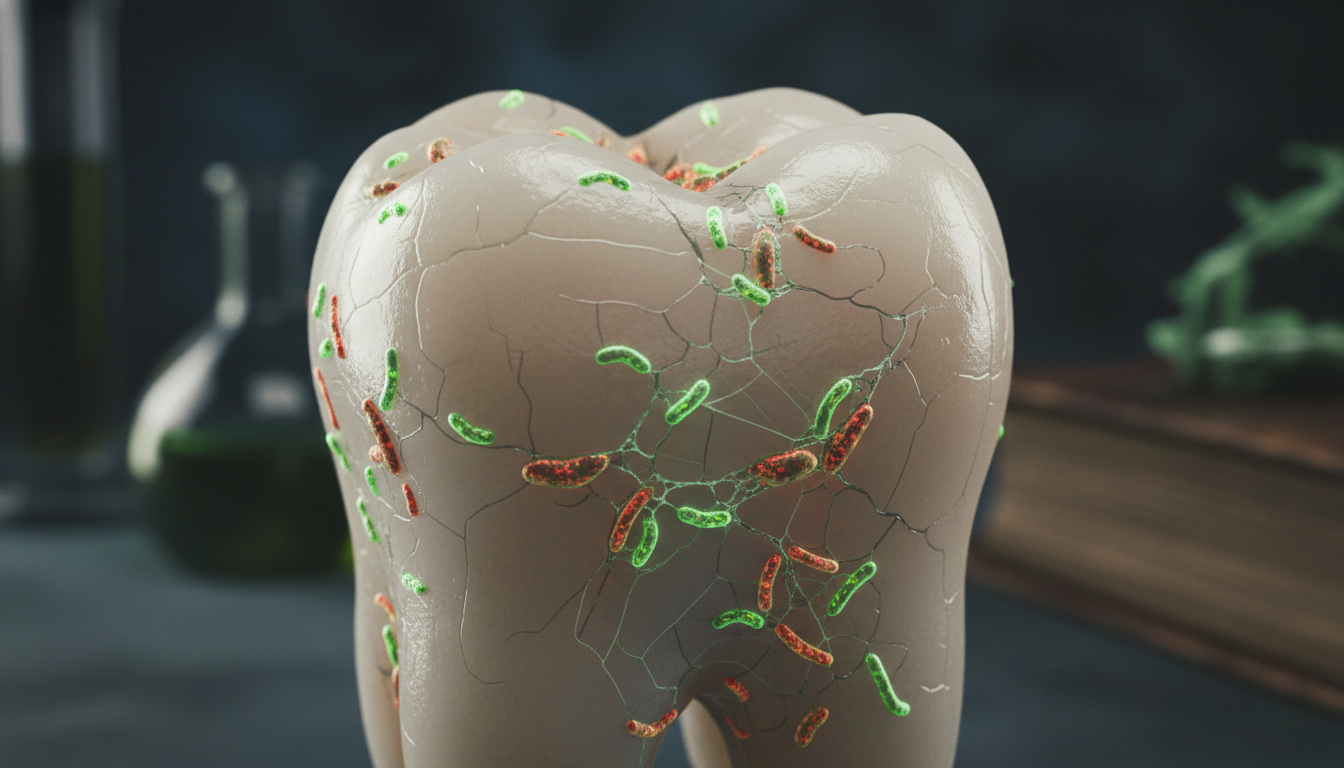
Your mouth is an ecosystem. It is home to roughly 700 different species of bacteria. Most are harmless commensals that actually help protect your gums. But within this microscopic jungle, there are villains.
The primary antagonists in the cavity formation process are Streptococcus mutans and Lactobacillus. These bacteria are acidogenic, meaning they produce acid, and aciduric, meaning they can survive in highly acidic environments.
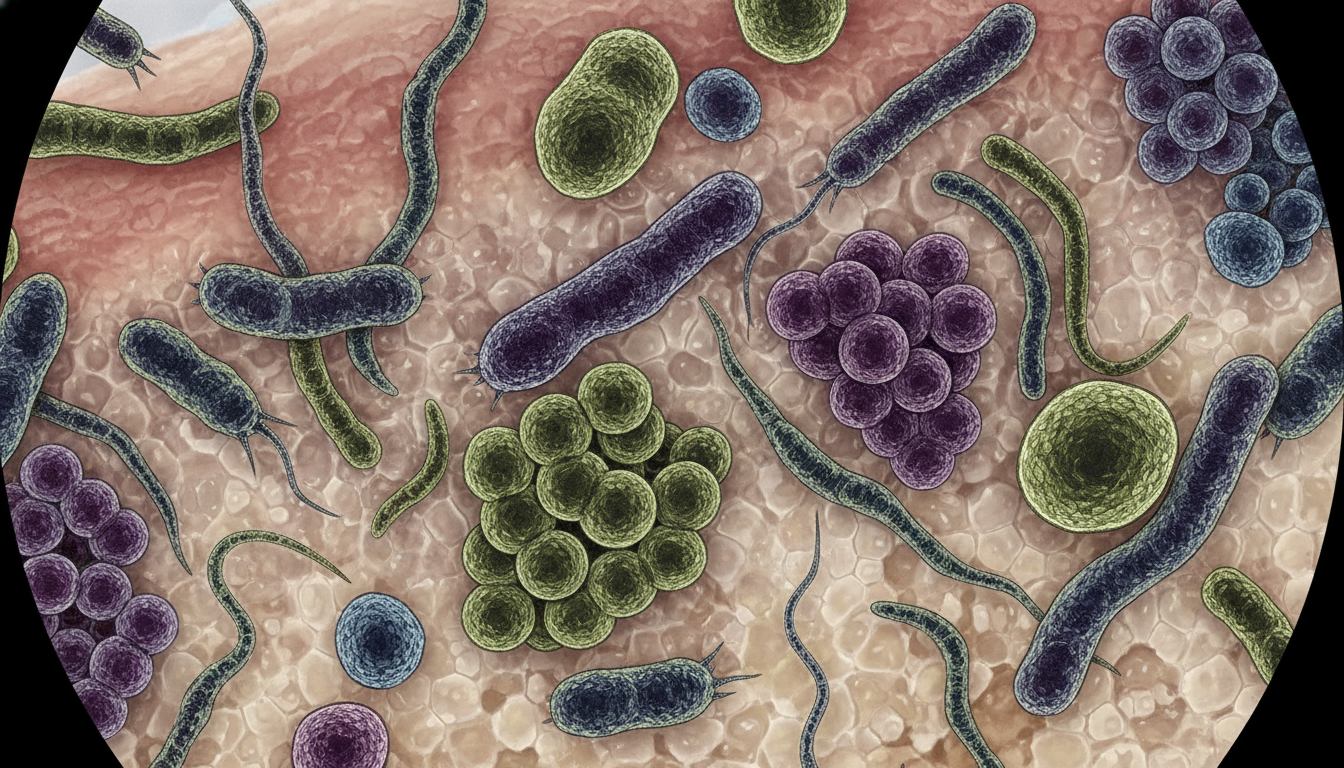
These bacteria don’t just float around aimlessly. They are smart. They organize themselves into a sticky, colorless film called plaque. This biofilm is their fortress. It adheres to your enamel, hiding in the grooves of your molars and along the gumline.
When you run your tongue over your teeth in the morning and they feel “fuzzy,” that’s them. That is the biofilm preparing for an assault. If not disrupted, this plaque calcifies into tartar, a hardened shield that no toothbrush can remove.
Cause 2: Sugary and Starchy Foods (The Fuel)
Bacteria need to eat to survive. And unfortunately, they love the exact same foods you do.
This is where sugar’s effect on teeth becomes critical to understand. When you consume fermentable carbohydrates—this includes obvious sugars like sucrose (table sugar) and glucose, but also refined starches like chips, crackers, and white bread—you are essentially ringing the dinner bell for the bacteria in your plaque.
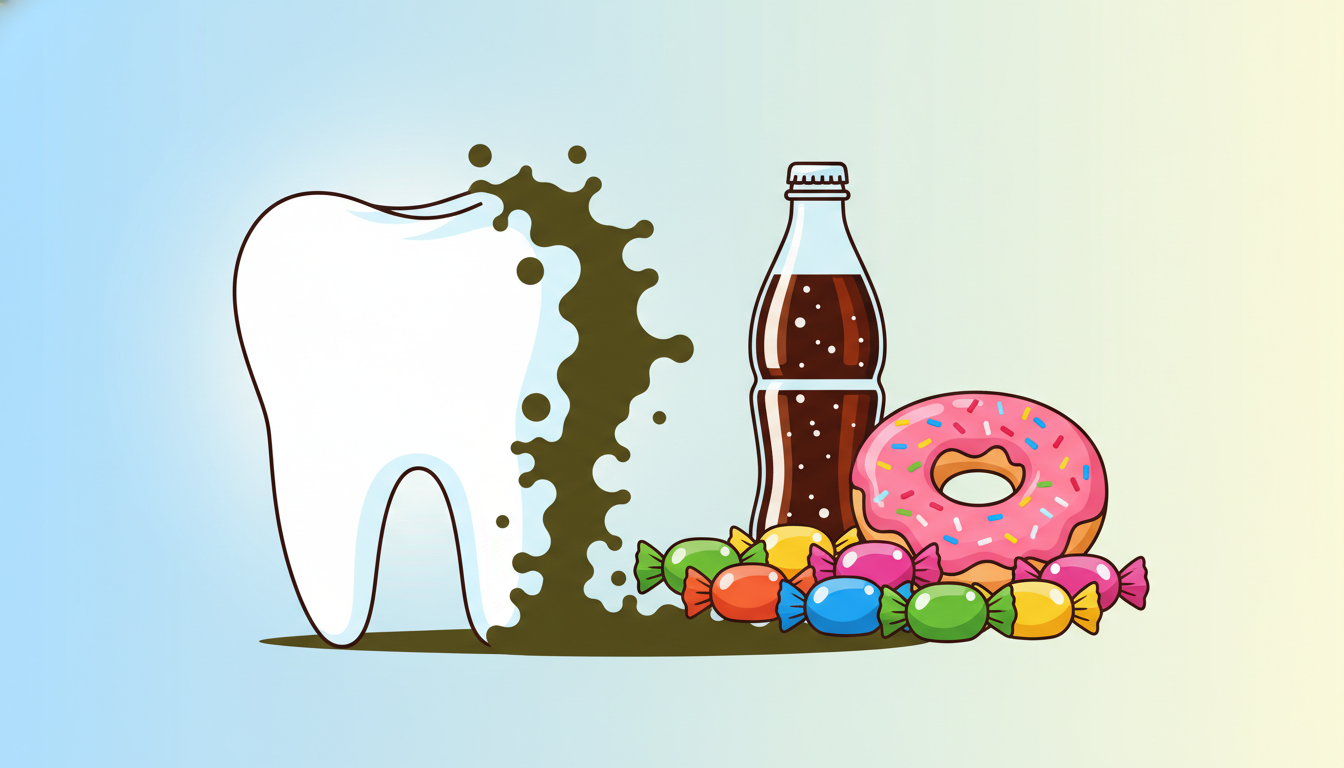
Here is the mechanism: The bacteria metabolize these sugars and, as a byproduct, excrete lactic acid. This isn’t a slow process. Within minutes of eating sugar, the pH level in your mouth plummets.
The Frequency Factor: Here is the kicker. It’s not just how much sugar you eat; it’s how often you eat it. If you eat a gigantic slice of cake in five minutes, your saliva can eventually wash away the sugar and neutralize the acid. But if you sip on a sugary soda or snack on raisins over the course of four hours, you are keeping your teeth in a constant state of “acid attack.”
Your enamel creates a defensive barrier, but it can only withstand so much. When the pH drops below 5.5, the minerals (calcium and phosphate) leach out of the tooth. This is the enamel erosion causes usually stem from.
Cause 3: Inadequate Oral Hygiene (The Neglect)
This seems obvious, but the nuance matters. Most people brush. But are you brushing effectively?
Inadequate hygiene leaves the biofilm (Cause 1) undisturbed. If plaque is left on the teeth for 24 to 48 hours, the bacterial colonies mature. They become more aggressive and produce more acid.
The anatomy of your mouth creates safe havens for these bacteria. The deep pits and fissures of your back teeth, and the tight contact points between teeth, are inaccessible to a toothbrush bristle. This is why flossing isn’t “extra credit”—it’s mandatory. Without it, you are leaving about 40% of your tooth surfaces dirty.
Furthermore, relying solely on mechanical cleaning often isn’t enough for everyone. Microscopic bacteria can hide deep within the gum pockets, far out of reach of your brush.
The “Missing Link” in Dental Health?
You brush, you floss, you restrict sugar… and you still get cavities. Why?
New research suggests there is a hidden biological trigger—a “short circuit” in your mouth’s natural defense system—that allows bad bacteria to multiply regardless of how well you scrub.
There is a strange, 7-Second Ritual that helps re-oxygenate the mouth and gums, creating an environment where decay-causing bacteria simply cannot survive.
>> Tap Here to Watch the Video Explaining This 7-Second Ritual
Cause 4: Insufficient Saliva Flow (The Missing Defense)
This is the most overlooked of the four causes. Your saliva is the unsung hero of your oral health. It is your body’s natural mouthwash and repair kit.
Saliva does three critical things:
- Mechanical Cleansing: It physically washes away sticky food particles and loose bacteria.
- Buffering: It contains bicarbonates that neutralize the acids produced by bacteria, raising the pH back to a safe level.
- Remineralization: It is supersaturated with calcium and phosphate. When an acid attack stops, saliva deposits these minerals back into the enamel, repairing microscopic damage.
However, many people suffer from Xerostomia (dry mouth). This can be caused by dehydration, aging, autoimmune diseases, or simply breathing through your mouth while sleeping. A massive culprit is medication; according to the Mayo Clinic, hundreds of common drugs, including antihistamines and antidepressants, reduce saliva flow.
Without adequate saliva, your teeth are defenseless. The acid stays on the enamel longer, and there are no minerals available to repair the damage. Decay progresses rapidly in a dry mouth.
Beyond the Big Four: Other Contributing Factors
While the four causes above are the primary drivers, other factors can tip the scales against you.
Tooth Morphology and Genetics:
Some people won the genetic lottery; others didn’t. You might have deep grooves (fissures) in your molars where plaque gets trapped easily. You might have genetically thinner enamel. While you can’t change your DNA, knowing you are at higher risk allows you to be more aggressive with prevention.
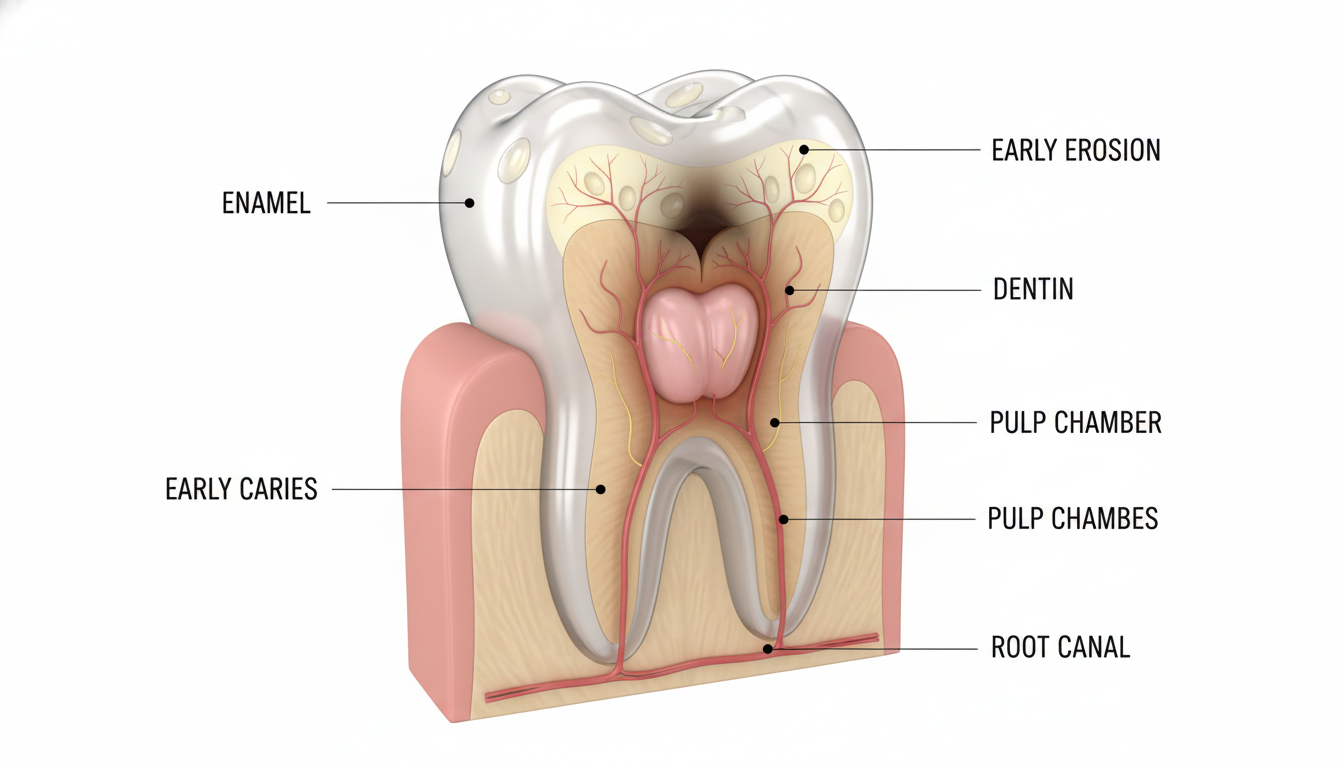
Acidic Erosion (Non-Bacterial):
Not all holes in teeth are from bacteria. Acid attack on teeth treatment often involves addressing dietary acids. If you drink lemon water all day or suffer from acid reflux (GERD), stomach acids can physically dissolve the enamel without bacteria being involved.
Stopping the Saboteurs: Comprehensive Prevention Strategies
Now that you know the four causes, you can dismantle them. Here is your battle plan for preventing cavities tips that actually work.
1. Disrupt the Bacteria
Brush twice a day for a full two minutes. It sounds basic, but most people brush for 45 seconds. Use an electric toothbrush if possible; the vibration disrupts the biofilm more effectively than manual scrubbing.
2. Starve the Enemy
You don’t have to quit sugar forever, but you must stop the grazing. Limit sugary snacks between meals. If you consume something sweet, do it all at once, then rinse your mouth with water. This gives your saliva a chance to recover. This is a cornerstone of diet and dental health.
3. Fortify the Defenses
Fluoride is non-negotiable for cavity-prone individuals. It binds to the enamel structure, making it harder and more resistant to acid. Ask your dentist about high-fluoride prescription toothpaste if you are getting frequent cavities.
4. Hydrate and Flow
Drink plenty of water throughout the day to stimulate saliva. If you have chronic dry mouth, talk to your doctor about your medications or use a saliva substitute gel. Chewing sugar-free gum with Xylitol can also stimulate flow and help neutralize acid.
When Decay Strikes: Treatment Options
If the cavity formation process has already won a battle, you need professional help. Ignoring it will only lead to pain and more expensive treatments.
- Remineralization: If caught in the “white spot” stage, topical fluoride can reverse the decay.
- Fillings: Once there is a physical hole, the decayed material must be removed and replaced with composite resin or amalgam.
- Crowns: If the tooth is too compromised for a filling, a “cap” is needed to restore structure.
- Root Canals: If the bacteria reach the pulp (nerve), this therapy is required to save the tooth.
Conclusion: Empowering Your Oral Health Journey
Tooth decay is not a mystery. It is a biological equation: Bacteria + Sugar + Time – Saliva = Decay.
By understanding “What are the 4 causes of tooth decay,” you are no longer a passive victim. You can control the bacteria, modify your diet to reduce acid attacks, improve your hygiene to disrupt the biofilm, and protect your saliva flow.
Don’t wait for the toothache. The best oral hygiene best practices are proactive, not reactive. However, if you feel like you are doing everything right and still facing issues, you might be missing that one crucial biological link we mentioned earlier.
Sometimes, the traditional advice of “brush and floss” misses the deeper imbalance happening in your oral microbiome.
>> Discover the “Dental Loophole” That Could Save Your Smile (Watch Now)
Take charge of your health today. Your future smile depends on it.